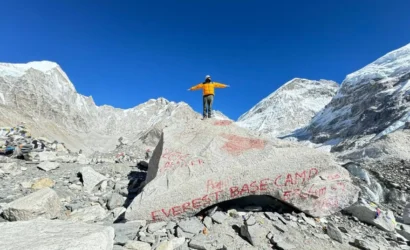
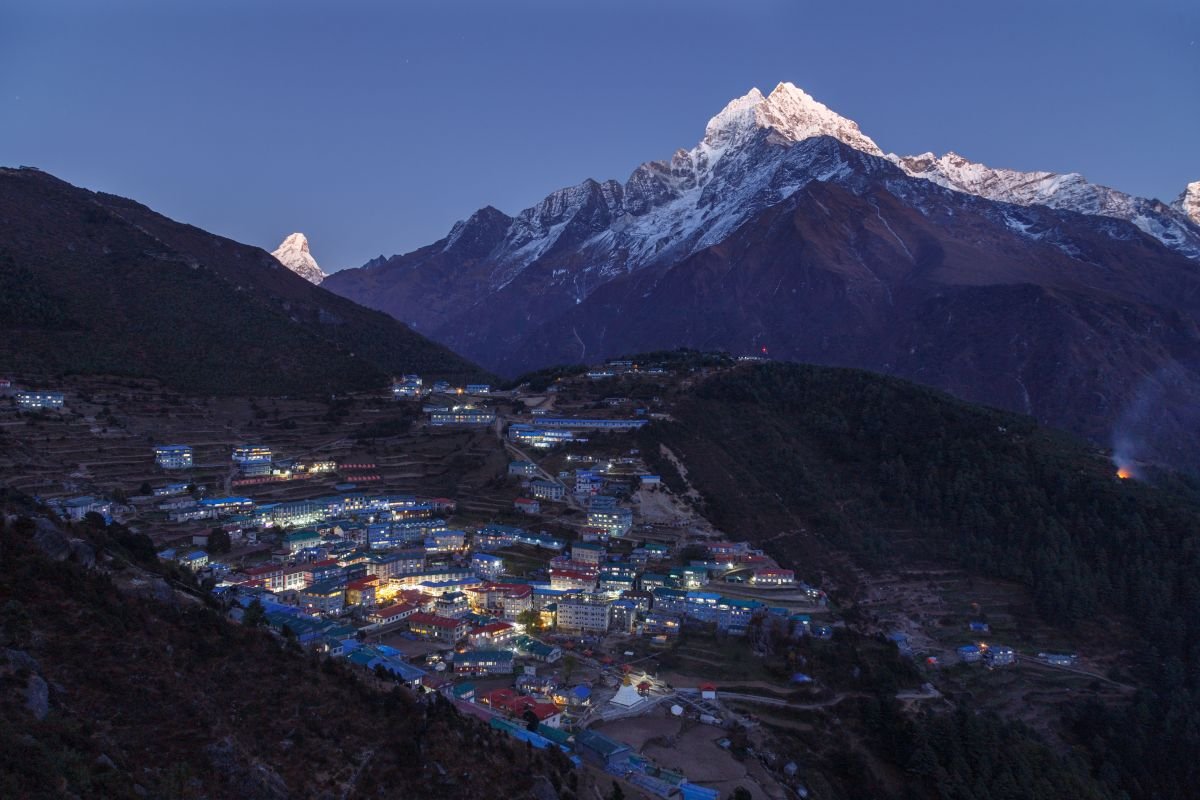
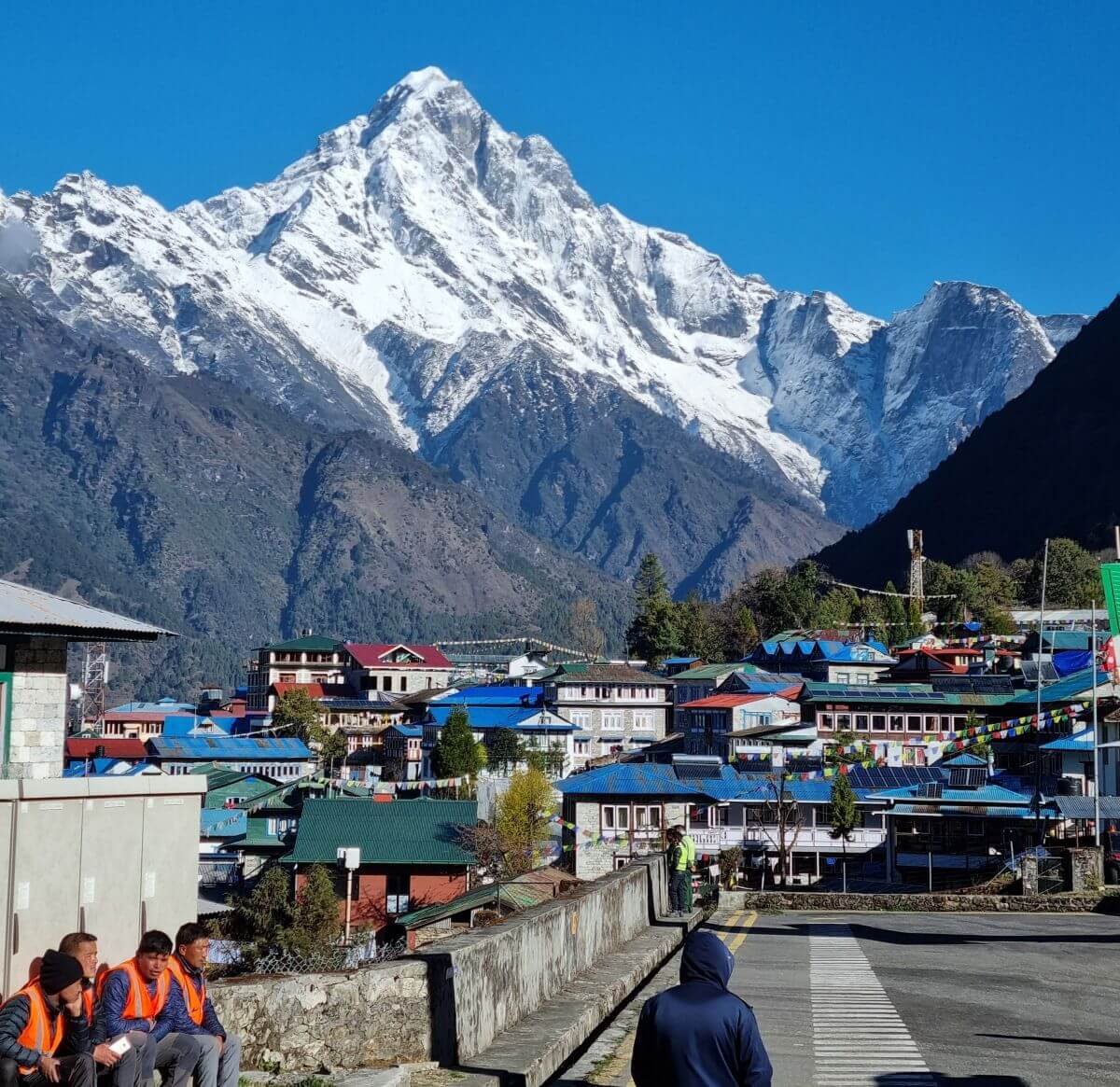
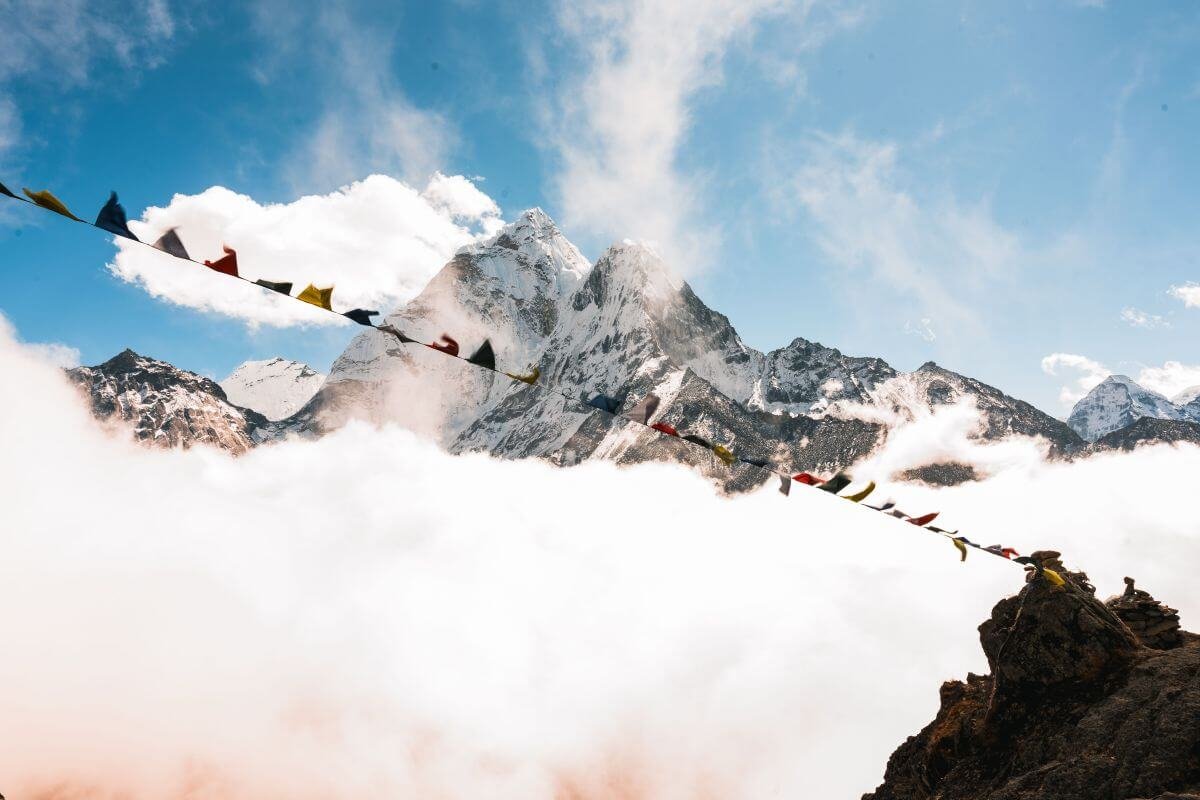
The Everest Base Camp Trek in Spring is a 14-day Himalayan journey featuring clear mountain views, pleasant weather, blooming rhododendrons, Sherpa culture, and the excitement of Everest expedition season. Trek through the legendary Khumbu Valley, explore Namche Bazaar, Tengboche, Dingboche, and reach Everest Base Camp (5,364 m) with experienced guides, comfortable stays, and unforgettable views of the world’s highest peaks.
Trip Info
-
3 Star Hotel
-
March - May
-
English Speaking
-
B, L, & D
-
Guided
-
1 to 15
Overview
The Everest Base Camp Trek in Spring is one of the most rewarding Himalayan adventures, offering crystal-clear mountain views, comfortable trekking temperatures, and vibrant landscapes. Spring, which lasts from March to May, is widely regarded as the best season to trek to Everest Base Camp because of its stable weather, blooming rhododendron forests, and excellent visibility of the world’s highest peaks.
As winter snow begins to melt, the Everest region comes alive with colorful flowers, lush valleys, and pleasant daytime temperatures. Trekkers can enjoy breathtaking views of Mount Everest (8,848.86 m), Lhotse, Nuptse, Ama Dablam, Thamserku, and many other Himalayan giants under bright blue skies. The moderate climate also makes long hiking days more enjoyable compared to the freezing winter months or the rainy monsoon season.
Spring is also the busiest climbing season on Mount Everest. Along the trail, you’ll meet trekkers from around the world as well as mountaineers preparing for their summit attempts. This unique atmosphere adds excitement to the journey and provides a rare opportunity to witness Everest expeditions in action at Everest Base Camp.
The adventure begins with a scenic flight to Lukla before following the legendary trail through Sherpa villages such as Phakding, Namche Bazaar, Tengboche, Dingboche, and Lobuche. Along the way, you’ll experience warm Sherpa hospitality, visit ancient monasteries, cross suspension bridges draped with prayer flags, and explore the breathtaking landscapes of Sagarmatha National Park, a UNESCO World Heritage Site.
Whether you’re an experienced trekker or embarking on your first Himalayan adventure, the Everest Base Camp Trek in Spring offers the perfect combination of favorable weather, unforgettable scenery, rich cultural experiences, and the once-in-a-lifetime achievement of reaching the base of the world’s highest mountain.
What Makes Spring the Best Season for Everest Base Camp Trek?
Spring stands out as the ideal trekking season because it balances almost every important factor required for a successful Himalayan adventure. The weather is generally predictable, mountain views are impressive, and the trails are accessible after the winter season.
Unlike winter, when extreme cold and heavy snowfall can create challenges, spring provides more comfortable trekking conditions. Unlike the monsoon season, when clouds and rain often block mountain views, spring usually offers clear skies and excellent photography opportunities.
The season also provides a culturally rich experience because trekkers can observe Sherpa communities preparing for the busy climbing period and witness the unique atmosphere of Everest expeditions.
Spring Scenery and Mountain Views During Everest Base Camp Trek
The Everest region becomes exceptionally beautiful during spring. The lower valleys transform with blooming flowers, fresh greenery, and flowing rivers, while the higher landscapes remain dominated by dramatic glaciers and snow-covered mountains.
Trekkers can enjoy panoramic views from famous viewpoints such as Namche Bazaar, Tengboche, Dingboche, and Kala Patthar. The clear spring atmosphere often provides some of the best sunrise and sunset views of Everest and surrounding Himalayan peaks.
The contrast between colorful forests, traditional Sherpa villages, ancient monasteries, and towering mountains creates a landscape that is difficult to experience in any other season.
Experience the Everest Expedition Season in Spring
Spring is not only a trekking season but also the main mountaineering season on Mount Everest. Every year, climbers from around the world arrive in Nepal during this period to attempt Everest summit climbs.
During the trek, visitors may encounter expedition groups carrying equipment, preparing at base camps, and adapting to the high-altitude environment. Everest Base Camp becomes a lively international meeting point where climbers and trekkers share the excitement of being close to the world’s highest mountain.
This unique expedition atmosphere adds another dimension to the trekking experience.
Rhododendron Blooms and Natural Beauty Along the Everest Trail
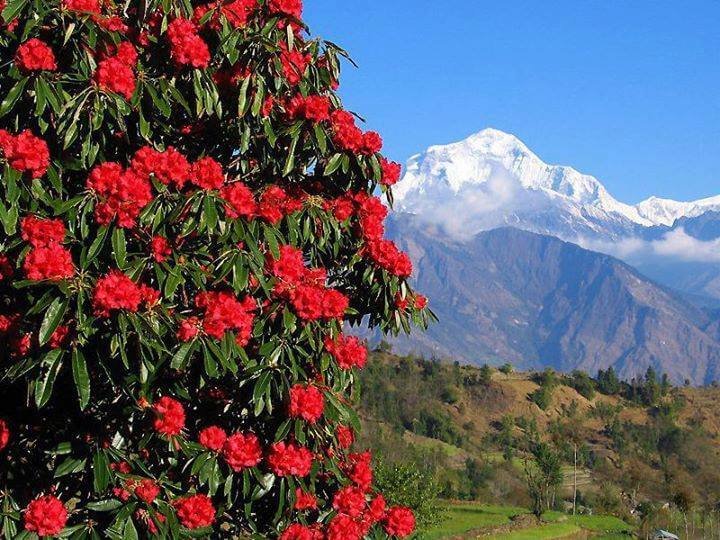
Spring brings colorful changes to the forests of the Everest region. Rhododendron, Nepal’s national flower, blooms across lower elevations, especially around areas covered by Sagarmatha National Park.
The forests between Lukla, Phakding, and Namche Bazaar become vibrant with red, pink, and white flowers. Along with rhododendrons, trekkers may also see alpine plants, juniper forests, and other Himalayan vegetation.
These natural highlights make spring particularly attractive for photographers and nature lovers.
Wildlife and Landscapes of Sagarmatha National Park in Spring
Spring is an excellent time to explore the natural environment of Sagarmatha National Park. The warmer weather increases wildlife activity, and trekkers may have opportunities to spot Himalayan animals.
The region is home to species such as Himalayan thar, musk deer, Himalayan monal, snow leopard, and various mountain birds. Wildlife sightings are never guaranteed because many animals remain hidden in the vast mountain terrain, but spring conditions provide better opportunities compared to colder months. The protected area also showcases diverse landscapes ranging from pine and rhododendron forests to glaciers, alpine meadows, and rocky mountain valleys.
Crowds and Trekking Conditions in Everest Region During Spring
Spring is one of the busiest periods in the Everest region because of excellent weather and climbing activities. April usually experiences the highest number of trekkers.
The popular sections of the trail, especially Namche Bazaar, Tengboche, and Gorak Shep, can feel crowded. However, the lively atmosphere also allows trekkers to meet people from different countries and experience the international spirit of the Himalayas.
Booking accommodation and flights in advance is recommended during the peak spring months.
Why Choose Everest Base Camp Trek in Spring?
Spring is considered one of the most rewarding seasons for the Everest Base Camp Trek because it offers the perfect combination of favorable weather, excellent visibility, and lively Himalayan landscapes. From March to May, the Everest region experiences more stable conditions compared to winter and monsoon, making trekking more comfortable and enjoyable.
During this season, trekkers can experience clear views of iconic Himalayan peaks including Mount Everest, Lhotse, Nuptse, Ama Dablam, Thamserku, and Pumori. The trails are decorated with blooming rhododendron flowers, green forests, and colorful mountain vegetation, creating a beautiful contrast against the snow-covered peaks.
Another unique attraction of spring is the Everest climbing season. Many international mountaineers arrive in the Khumbu region to prepare for their Everest summit attempts, and trekkers can witness the excitement around Everest Base Camp. The combination of pleasant temperatures, spectacular scenery, and cultural experiences makes spring one of the most preferred times to complete the trek.
Everest Base Camp Trek Spring Itinerary
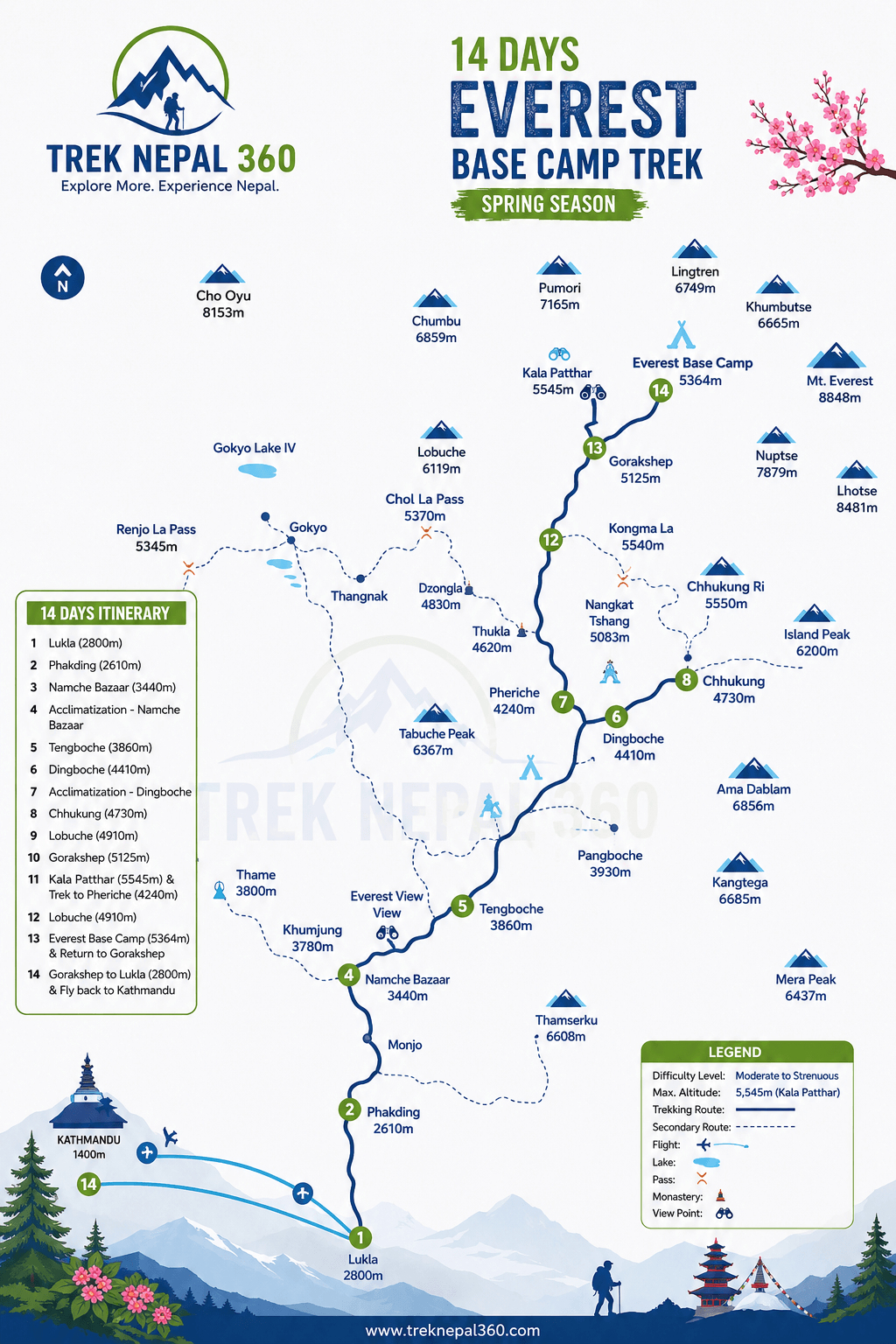
A typical spring itinerary follows the classic route through the Khumbu Valley, starting with a scenic flight from Kathmandu to Lukla. The trek gradually gains altitude through Sherpa villages and important landmarks before reaching Everest Base Camp and Kala Patthar.
Most trekkers follow a 14-day itinerary depending on their pace and acclimatization requirements. The journey usually includes stops at Namche Bazaar, Tengboche, Dingboche, Lobuche, and Gorak Shep.
A properly designed spring itinerary includes enough rest days to adapt to altitude and reduce the risk of altitude sickness.
Cost of Everest Base Camp Trek in Spring
The cost of the Everest Base Camp Trek in spring depends on factors such as trek duration, services included, accommodation standards, transportation, guide and porter services, and whether the trek is organized privately or in a group.
Spring prices can be slightly higher compared to off-season periods because it is the peak trekking season. Travelers should also consider additional expenses such as international flights, travel insurance, personal equipment, tips, and extra accommodation in Kathmandu.