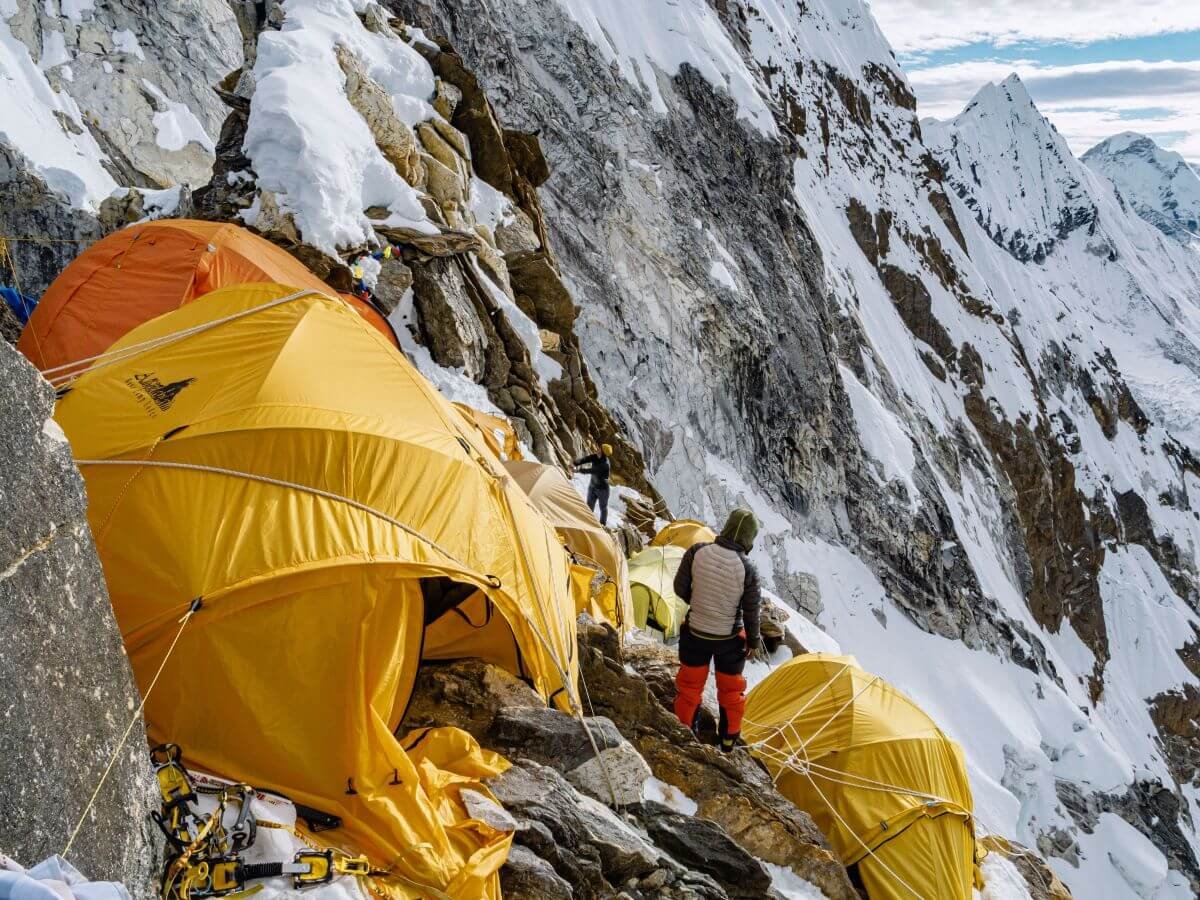
The Mount Everest Expedition Spring 2027 is a 60-day guided summit adventure via Nepal’s classic South Col Route, taking climbers from Kathmandu to Everest Base Camp and the summit at 8,848.86m. With expert Sherpa support, acclimatization rotations, technical training, oxygen support, safety management, and complete expedition logistics, this journey offers experienced climbers the opportunity to conquer the world’s highest peak during the best spring climbing season.
Trip Info
-
8848.86 m
-
Spring
-
B, L, & D
-
Guided
-
Moderate
-
1 to 10
Overview
The Mount Everest Expedition Spring 2027 offers an extraordinary opportunity to climb and summit the world’s highest mountain at 8,848.86 meters (29,031.7 ft) through the classic Nepal South Col route. Spring is considered the ideal climbing season for an Everest summit attempt because it provides the most favorable weather conditions, stable climbing windows, and better opportunities for reaching the top of Mount Everest safely.
This Everest climbing expedition is designed for experienced mountaineers seeking to challenge themselves on one of the most iconic 8000-meter peaks in the world.
The journey includes a gradual acclimatization process, multiple rotations between Everest Base Camp and higher camps, and a carefully planned summit push through the Khumbu Icefall, Western Cwm, Lhotse Face, and the final summit ridge.
Throughout the expedition, climbers receive professional support from experienced Sherpa guides, high-altitude climbing specialists, and a dedicated expedition team.
Safety remains the highest priority with proper acclimatization, supplemental oxygen support, weather monitoring, medical preparation, and well-managed logistics from Kathmandu to Everest Base Camp and beyond.
The Spring 2027 Everest Expedition combines adventure, technical mountaineering, and Himalayan exploration into a once-in-a-lifetime experience.
From trekking through the legendary Khumbu region to standing on the summit of Mount Everest, this expedition is a journey of endurance, determination, and achievement for climbers dreaming of conquering the highest peak on Earth.
Stand on the Highest Point on Earth
Reaching the summit of Mount Everest (8,848.86 meters / 29,031.7 ft) is one of the greatest achievements in high-altitude mountaineering.
The Everest Expedition Spring 2027 gives climbers the opportunity to stand on the highest point on Earth and experience the incredible feeling of looking over the Himalayas from the top of the world.
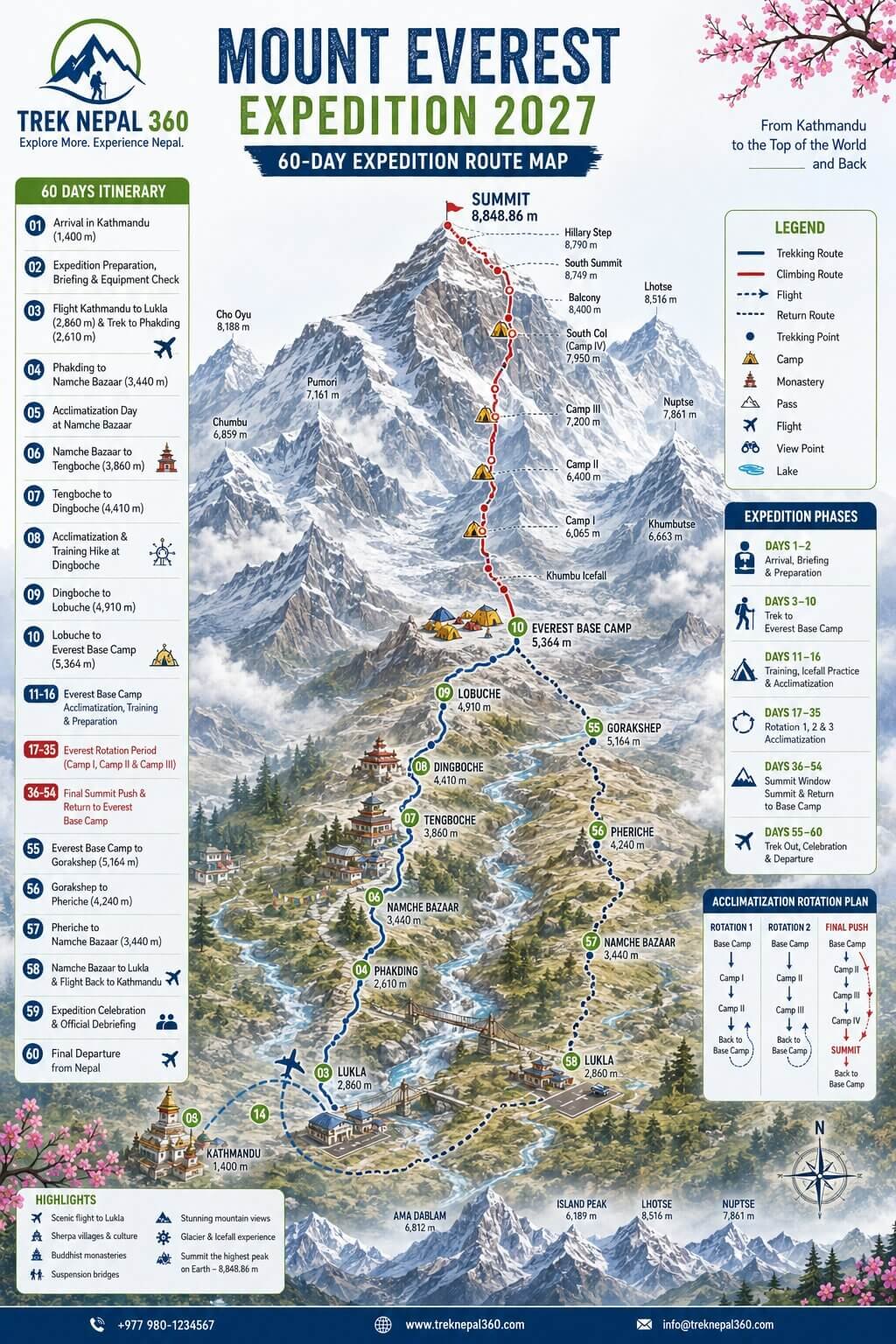
The summit journey follows the legendary South Col route in Nepal, passing through challenging sections such as the Khumbu Icefall, Camp I, Camp II, Lhotse Face, Camp III, and Camp IV (South Col) before making the final summit push.
With careful acclimatization, proper preparation, and expert guidance, climbers are supported throughout their journey toward achieving their dream of summiting Mount Everest.
Standing on the summit of Everest is not only about reaching a physical destination; it represents years of preparation, determination, endurance, and the courage to overcome one of the most challenging environments on the planet.
Experienced Everest Sherpa Support Team
A strong and experienced Sherpa support team plays a vital role in the success and safety of every Everest climbing expedition. Our expedition is supported by professional Sherpa climbers who have extensive experience navigating the Everest climbing route, high-altitude environments, and technical sections of the mountain.
From carrying essential supplies and preparing higher camps to assisting climbers during acclimatization rotations and the final summit push, our Sherpa team provides reliable support throughout the expedition.
Their deep knowledge of the mountain, local conditions, weather patterns, and climbing techniques helps climbers approach Everest with greater confidence.
With dedicated Sherpa assistance, professional expedition management, and a safety-focused approach, climbers receive the support needed to face the challenges of climbing one of the world’s most demanding 8000-meter peaks.
Everest Peak Climbing Experience: From Base Camp to Summit
The Everest peak climbing experience is a remarkable journey that takes climbers from the legendary Everest Base Camp to the summit of Mount Everest, passing through some of the most challenging and iconic sections of the Himalayan landscape.
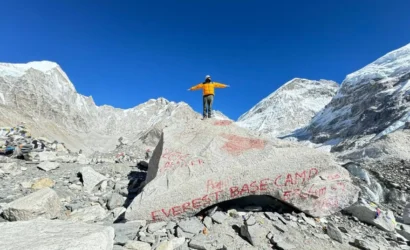
The expedition begins with a scenic trek through the Khumbu region, where climbers experience Sherpa culture, ancient monasteries, and breathtaking views of the world’s highest mountains before reaching Everest Base Camp.
At Everest Base Camp, climbers begin their preparation for the summit attempt with a carefully planned acclimatization and rotation schedule.
The journey continues through the famous Khumbu Icefall, Western Cwm, Lhotse Face, and higher camps, including Camp I, Camp II, Camp III, and Camp IV (South Col). Each stage helps climbers adapt to extreme altitude while building confidence and strength for the final summit push.
The final climb to the top of Everest is an unforgettable high-altitude adventure that requires physical endurance, technical climbing skills, and strong determination.
Supported by experienced Everest Sherpa guides, fixed ropes, supplemental oxygen, and professional expedition management, climbers make their way toward the summit ridge to achieve the dream of standing on the highest peak on Earth.
The Everest summit experience is more than just a climb; it is a life-changing journey of courage, preparation, and perseverance that creates memories lasting a lifetime.
Everest Climbing Route & Summit Journey
The Mount Everest climbing route through Nepal follows the famous South Col Route, which is considered the classic and most popular route for Everest summit attempts.
This legendary path takes climbers through the challenging terrain of the Khumbu region, beginning from Everest Base Camp and continuing through a series of high-altitude camps before reaching the summit of the world’s highest mountain.
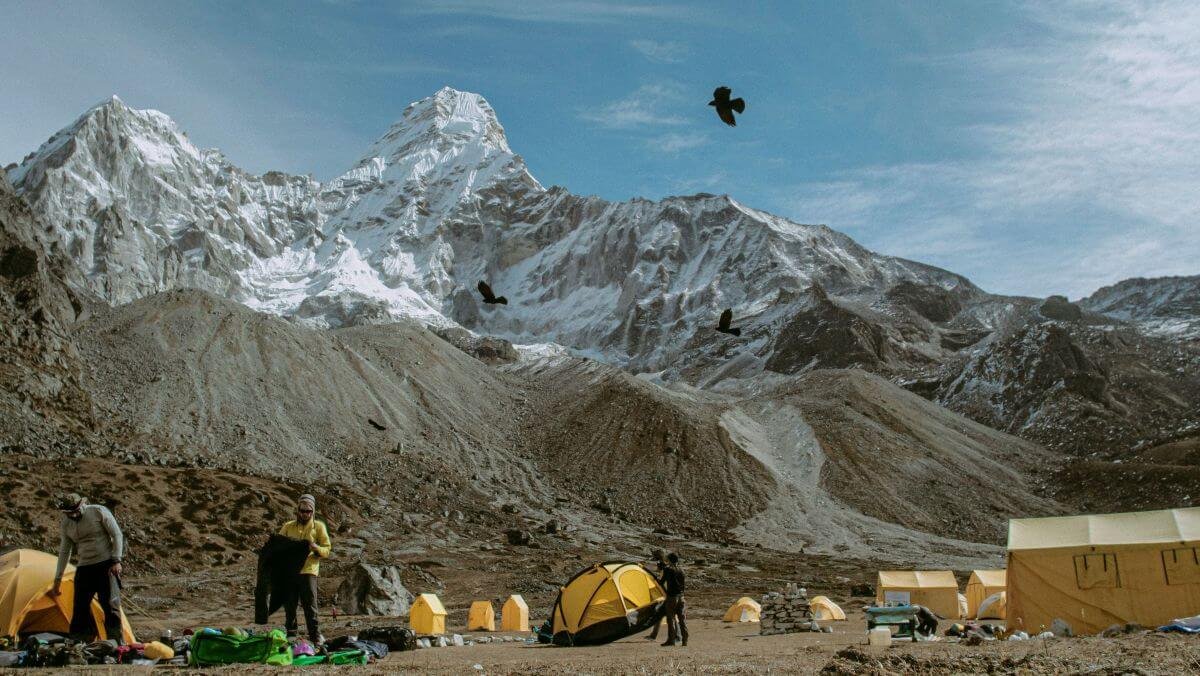
The journey starts after reaching Everest Base Camp (5,364 meters), where climbers spend time acclimatizing and preparing for higher-altitude rotations.
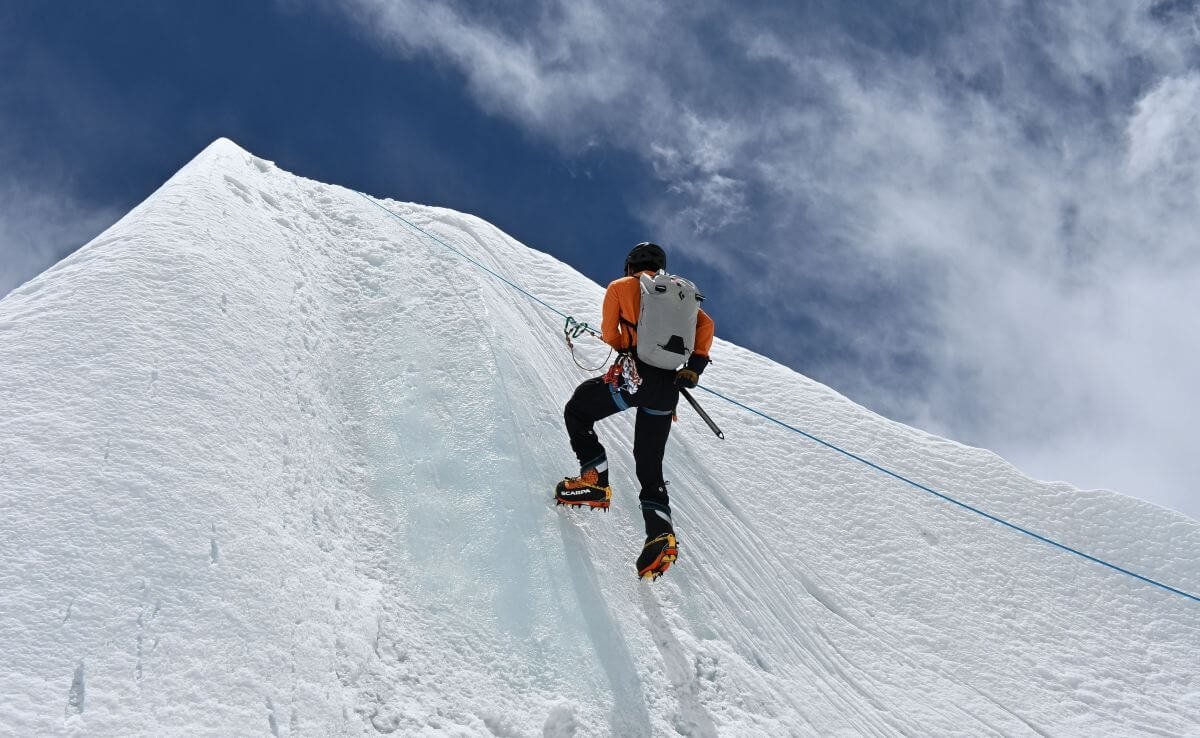
The first major challenge is the Khumbu Icefall, one of the most technical sections of the Everest route, requiring careful movement through crevasses, ice formations, and fixed rope sections with support from experienced Sherpa guides.
After crossing the Khumbu Icefall, climbers move through the Western Cwm toward Camp I (6,065 meters) and Camp II (6,400 meters), also known as Advanced Base Camp. The route then continues up the steep Lhotse Face to Camp III (7,200 meters) before reaching Camp IV (South Col) at around 7,900 meters, the final camp before the summit attempt.
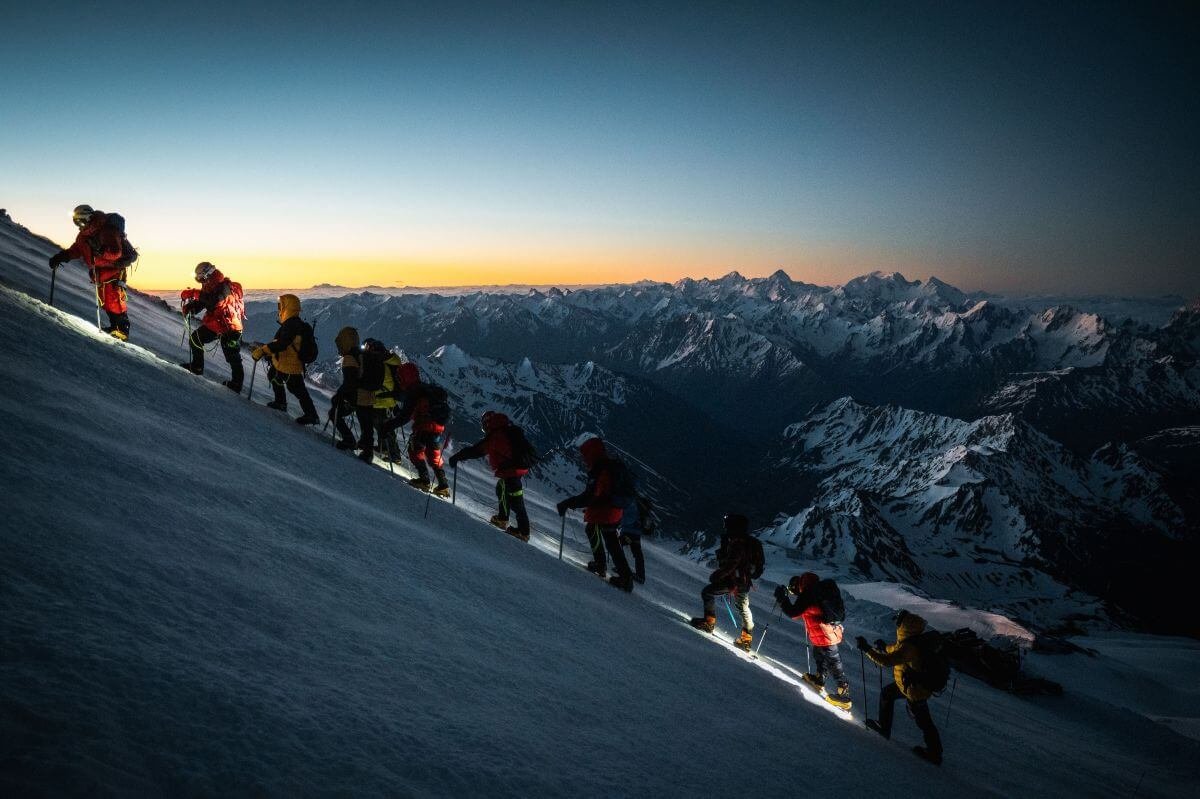
The final Everest summit push begins from Camp IV, usually during the night to reach the top in the early morning hours. Climbers pass through the Balcony, South Summit, and the famous Hillary Step area before reaching the summit ridge and standing at 8,848.86 meters (29,031.7 ft) above sea level.
Throughout the Everest climbing route, safety remains the highest priority with proper acclimatization, fixed rope systems, weather monitoring, supplemental oxygen, and continuous support from professional Sherpa climbers and expedition leaders.
The journey from Base Camp to the summit is a true test of endurance, skill, and determination, offering one of the most rewarding experiences in Himalayan mountaineering.
Safety Measures for Mount Everest Summit Climbing
Safety is the most important part of every Mount Everest summit climbing expedition. Climbing the world’s highest peak involves extreme altitude, unpredictable weather, and challenging terrain, which is why every stage of the expedition is carefully planned with professional guidance, proper preparation, and advanced safety systems.
The Everest Expedition Spring 2027 follows a safety-focused approach with experienced Everest Sherpa guides, professional climbing leaders, and a well-organized support team.
Before attempting the summit, climbers complete a gradual acclimatization schedule with rotation climbs between Everest Base Camp and higher camps, allowing the body to adjust to the low oxygen environment at extreme altitude.
During the summit journey, climbers are supported with essential safety measures, including supplemental oxygen, high-altitude climbing equipment, fixed rope systems, and regular health monitoring. Experienced Sherpa guides assist climbers through difficult sections such as the Khumbu Icefall, Lhotse Face, and summit ridge, helping ensure safe movement throughout the route.
Weather conditions play a major role in Everest climbing safety, so summit attempts are planned according to reliable weather forecasts and suitable climbing windows.
The expedition team continuously monitors wind speed, temperature, snowfall, and overall mountain conditions before making decisions about moving toward the summit.
Additional safety arrangements include emergency communication systems, medical support, proper hydration and nutrition, and carefully managed camp logistics.
The expedition team follows strict safety procedures and understands that reaching the summit is only successful when climbers return safely.
With experienced leadership, professional Sherpa support, and careful risk management, the Everest summit climbing journey is designed to provide climbers with the safest possible opportunity to achieve their dream of standing on the highest point on Earth.
Mount Everest Climbing Requirements & Preparation
Climbing Mount Everest requires strong physical fitness, previous high-altitude climbing experience, technical skills, and proper preparation. Climbers joining the Everest Expedition Spring 2027 should have experience on 6000m or 7000m peaks, along with knowledge of glacier travel, fixed ropes, crampon use, and basic mountaineering techniques.
Proper training is essential for an Everest summit attempt. Climbers should focus on endurance, strength, cardiovascular fitness, and long-duration hiking to prepare for extreme altitude and challenging conditions.
Mental preparation is equally important as climbers must be ready to handle cold temperatures, low oxygen levels, and long climbing days.
With the right experience, training, equipment, and guidance from an experienced Sherpa climbing team, climbers can safely prepare for the ultimate challenge of standing on the summit of Mount Everest.
Everest Expedition Cost & Package Details
The Mount Everest Expedition Spring 2027 package costs USD 45,000 per person and includes complete expedition support, logistics, and climbing services from arrival in Nepal until the summit attempt.
The package covers airport transfers, Kathmandu–Lukla flights, 5-star hotel accommodation in Kathmandu, trekking and climbing accommodation, full board meals, Everest climbing permits, experienced IFMGA/senior Sherpa climbing guides, high-altitude Sherpa support, acclimatization rotations, Base Camp facilities, climbing logistics, high-altitude food, oxygen cylinders, mask and regulator, porters and yaks, medical support, emergency planning, waste management, government fees, taxes, and service charges.
With professional guidance and complete support, this package is designed to provide a safe and well-managed journey toward the summit of Mount Everest.
Best Time to Climb Mount Everest
The best time to climb Mount Everest is during the Spring climbing season, especially from late April to May. The Everest Expedition Spring 2027 is scheduled during this ideal window because the mountain usually offers more stable weather conditions, lower wind speeds, and suitable summit opportunities compared to other times of the year.
During the spring season, climbers benefit from the famous Everest summit window, when temperatures become slightly more favorable and experienced teams can safely plan their final summit push. The route through the Khumbu Icefall, Western Cwm, Lhotse Face, and South Col is prepared by professional teams, making spring the preferred season for most Everest summit attempts.
The spring season also provides better expedition conditions with improved logistics, active Sherpa support teams, and a higher number of experienced climbers on the mountain. With proper acclimatization, weather monitoring, and expert guidance, Spring 2027 offers the most suitable opportunity to attempt the summit of Mount Everest.
Mount Everest Expedition 2027 Spring – Bookings Open
Take on the ultimate mountaineering challenge with our Mount Everest Expedition 2027 Spring and experience the journey to the summit of the world’s highest mountain at 8,848.86 meters. The spring season offers the most suitable conditions for Everest climbing, with stable weather, established routes, and experienced high-altitude support teams.
Our Everest Expedition 2027 is designed for experienced climbers seeking a professionally managed summit attempt through the classic South Col Route in Nepal. From Kathmandu preparation to Everest Base Camp, high camps, and the final summit push, we provide complete expedition support, logistics, and Sherpa assistance.
With limited expedition slots available, book your Mount Everest Expedition 2027 Spring adventure today and prepare for a once-in-a-lifetime journey to the top of the world.