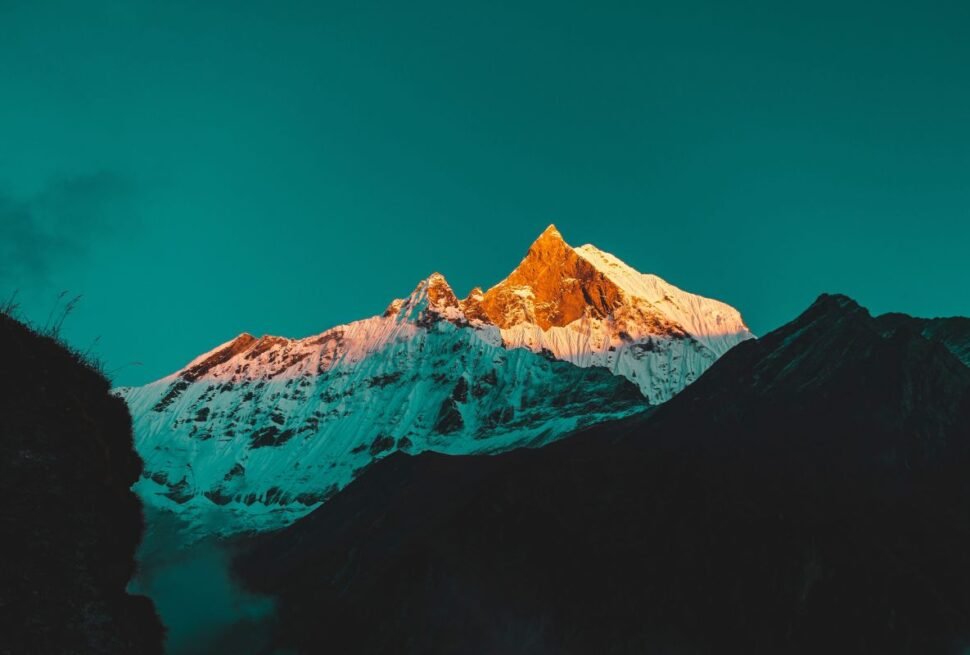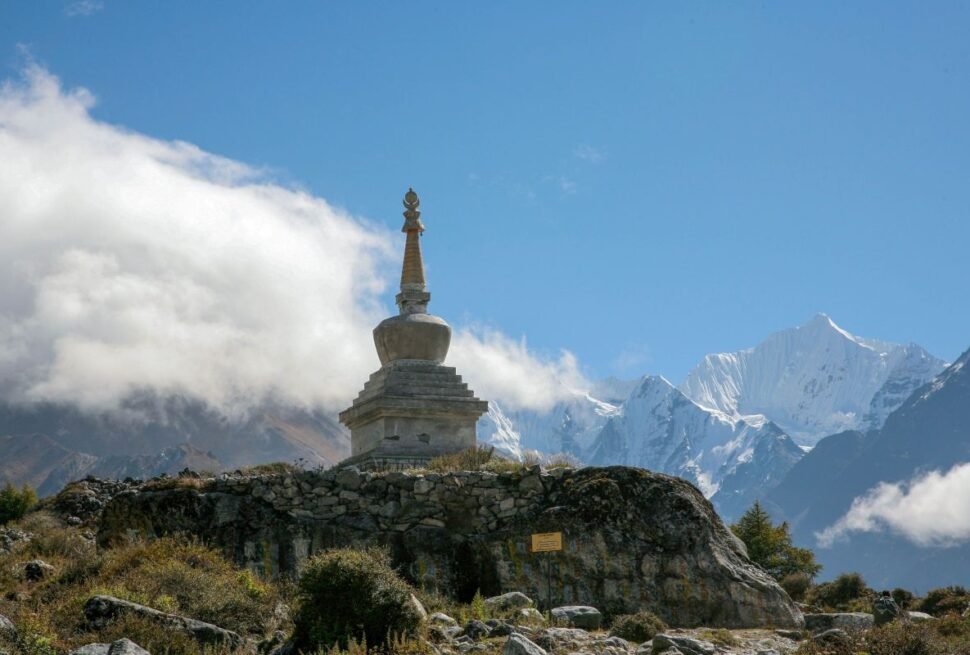
There are some journeys you take because you need a holiday, and then there are journeys you take because you want to challenge yourself and experience something you will remember for the rest of your life. The Everest Base Camp Trek belongs firmly in the second category.
Walking through the Himalayas toward the world’s highest mountain is about much more than reaching a point on a map. The trail takes you through quiet mountain villages, Buddhist monasteries, suspension bridges, rhododendron forests and high-altitude landscapes that seem to become more impressive with every day of walking.
Along the way, you experience the unique culture of the Khumbu, meet welcoming Sherpa communities, spend nights in mountain lodges and gradually watch the landscape change as you climb higher.
And then there is Everest.
Seeing Mount Everest from the trail is one thing. Walking into Everest Base Camp and standing beneath the enormous Himalayan peaks is an entirely different experience.
If an adventure in Nepal has been sitting on your bucket list for years, here is why the Everest Base Camp Trek deserves a place near the top.
Table of Contents
What Makes the Everest Base Camp Trek So Special?
The Everest Base Camp Trek is special because the destination is only one part of the story.
You do not simply arrive at Everest Base Camp, take a photograph and leave. You spend days earning your way there.
The journey generally begins with a flight toward Lukla, followed by days of walking through the Khumbu Valley. The trail passes through places such as Phakding, Namche Bazaar, Tengboche, Dingboche, Lobuche and Gorak Shep before reaching Everest Base Camp.
Every day feels different.
One morning, you might be walking through a green forest beside a mountain river. A few days later, you are surrounded by enormous rock faces, glaciers and snow-covered peaks. The air gets thinner, the landscape becomes more rugged and the mountains appear increasingly close.
That gradual transformation is one of the things that makes this Himalayan trek so memorable.
It is also a journey where the little moments matter. Having tea in a mountain lodge, crossing a suspension bridge covered with prayer flags, watching the clouds move across Ama Dablam or sharing stories with fellow trekkers can become memories just as valuable as reaching Base Camp itself.

You Get to See Mount Everest Up Close
For many trekkers, this is the biggest reason to choose the Everest Base Camp Trek.
Mount Everest has fascinated people for generations. You have probably seen hundreds of photographs of it, watched documentaries about expeditions or read stories about climbers attempting to reach its summit.
But photographs cannot quite prepare you for seeing the Himalayas in person.
As you progress along the trail, Everest gradually becomes part of the surrounding mountain panorama. From viewpoints around the Khumbu, you can see Everest alongside other enormous peaks, including Lhotse, Nuptse and Ama Dablam.
One important thing to understand is that Everest is not always the most visually dominant mountain from every point on the trek. The surrounding peaks are spectacular in their own right, and the entire landscape contributes to the experience.
That is why the trek feels like much more than an Everest sightseeing trip.
You are walking through the environment in which generations of Himalayan climbers, guides and local communities have lived and worked.
The Journey Takes You Through the Heart of the Khumbu
The route to Everest Base Camp takes you deep into the Khumbu region, and every major stop adds something different to the journey.
After starting around Lukla, trekkers usually walk toward Phakding before continuing toward Namche Bazaar.
Namche is often considered the gateway to the Everest region. Built into a mountain amphitheater, this lively Sherpa town is an important acclimatization stop and one of the most memorable places on the route.
From Namche, the trail continues toward Tengboche, where the famous monastery sits against a spectacular Himalayan backdrop. Beyond Tengboche, the vegetation gradually becomes thinner as the trail climbs toward Dingboche and the higher parts of the Khumbu.
The landscape around Lobuche and Gorak Shep feels completely different from the lower sections of the trail. Trees become scarce, the terrain becomes more rugged and enormous mountains surround you from almost every direction.
Finally, you make your way toward Everest Base Camp.
This gradual progression is one of the reasons the trek feels like a real expedition rather than an ordinary walking holiday.
Experience Sherpa Culture and Himalayan Villages
The mountains may attract people to the Everest region, but the people of the Khumbu are an equally important part of the journey.
The trek takes you through communities where Sherpa culture is deeply connected with the mountains and Buddhist traditions. You will encounter monasteries, prayer wheels, mani walls, chortens and prayer flags along the trail.
You may also notice how different life is at high altitude.
Mountain lodges become important gathering places. Trekkers and local guides sit together over hot meals and tea. Porters carry supplies along the trails, while local communities provide accommodation, food and other services to people travelling through the region.
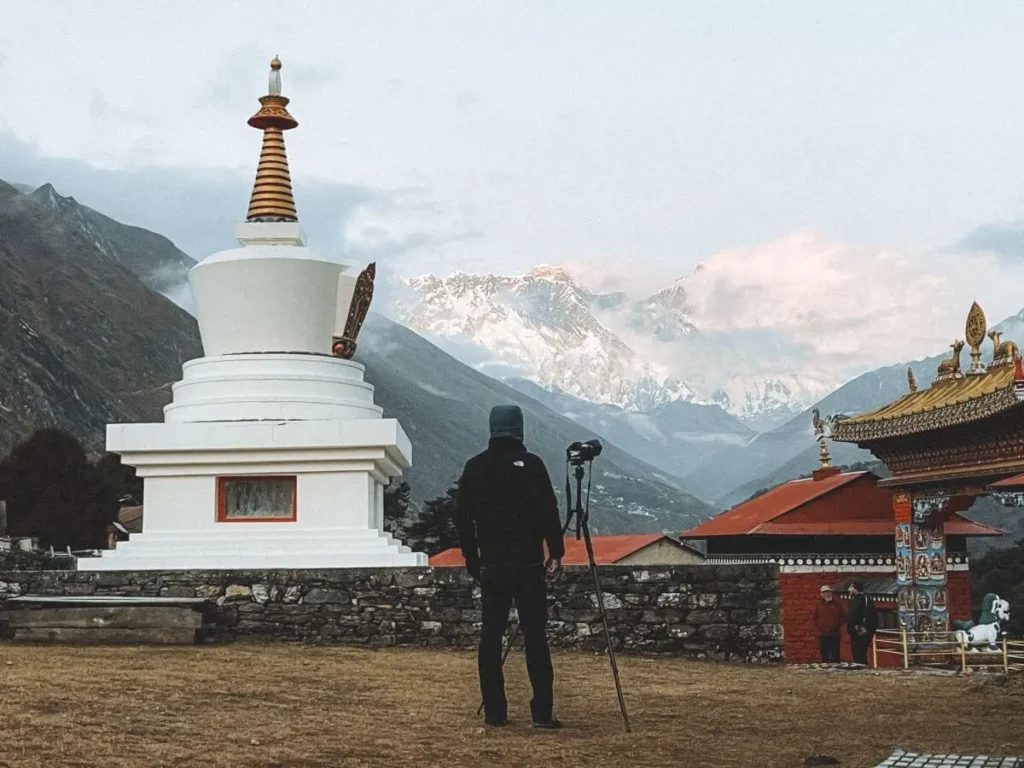
Tengboche is particularly significant for many trekkers because of its monastery and peaceful mountain setting.
Taking a moment to observe the prayer flags moving in the wind or listening to the sounds around a Himalayan monastery can be just as memorable as taking another photograph of the mountains.
The Everest Base Camp Trek gives you the opportunity to experience this culture respectfully while supporting the communities that make trekking in the region possible.
Stand at Everest Base Camp
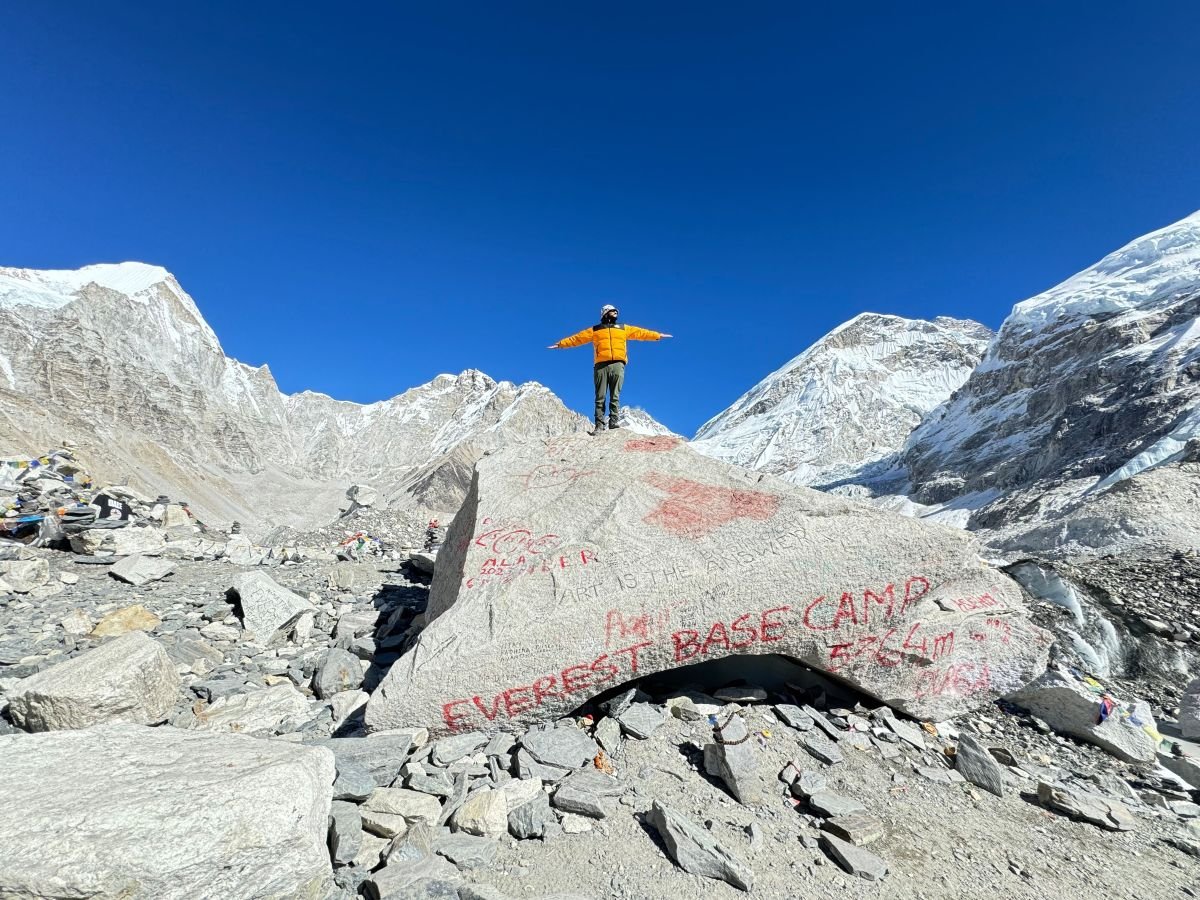
After days of walking, you eventually reach the place you have been thinking about since the beginning of the journey: Everest Base Camp.
Reaching Base Camp can be surprisingly emotional.
There is usually no dramatic finish line waiting for you. Instead, there is the familiar Khumbu landscape, the glacier, enormous surrounding peaks and the famous Base Camp markers and prayer flags.
But you know how much effort it took to get there.
You have walked for days, climbed thousands of metres in elevation and adapted to increasingly thin air. You have probably experienced tired legs, cold mornings and moments when the trail seemed longer than expected.
That is what makes standing at Base Camp meaningful.
You are not simply visiting a famous place. You have walked there.
During climbing seasons, the area can also become a staging ground for mountaineering expeditions attempting Everest and other Himalayan peaks. Outside expedition periods, the experience is quieter, but the significance of reaching the base of the world’s highest mountain remains.
The Views from Kala Patthar Are Worth the Trek
If Everest Base Camp is the emotional destination of the trek, Kala Patthar is arguably one of the best places for panoramic mountain views.
The climb to Kala Patthar is usually made from Gorak Shep, often early in the morning. It is not an easy walk, particularly at high altitude, but the reward is a remarkable panorama of Everest and the surrounding peaks.
As the first light reaches the mountains, the landscape begins to change.
Everest, Nuptse, Pumori and other Himalayan peaks become illuminated by the rising sun, creating a scene that is difficult to describe without sounding exaggerated.
This is also why trekkers should not think of the Everest Base Camp Trek as simply “walking to Base Camp.”
Some of the most memorable views happen along the way, and the viewpoints around the route can offer perspectives that you would never get from Base Camp itself.
Is the Everest Base Camp Trek Difficult?
Yes, the Everest Base Camp Trek is challenging, but you do not need to be an experienced mountaineer to complete it.
The main challenge is not technical climbing. It is the combination of long walking days, altitude, steep sections, cold temperatures and the need to adapt gradually to higher elevations.
Most days involve several hours of walking, and the trail includes plenty of uphill and downhill sections. As you approach the higher parts of the Khumbu, the thin air can make even a relatively short climb feel much harder than expected.
Altitude is the biggest factor to take seriously.
A well-designed itinerary includes acclimatization days, allowing your body time to adjust before continuing higher. Walking at a comfortable pace, staying hydrated, eating properly and listening to your body are all important parts of a successful high-altitude trek.
You do not need to race.
In fact, one of the most important lessons on the Everest trail is that slow and steady is often the smartest way forward.
How Long Does the Everest Base Camp Trek Take?
A typical Everest Base Camp itinerary takes around 12 to 16 days, depending on the route, acclimatization schedule, transportation arrangements and whether you include additional viewpoints or buffer days.
The walking itself is only part of the schedule.
You also need time for acclimatization, particularly around Namche Bazaar and Dingboche or similar high-altitude locations. These rest days are not wasted days. They are an important part of allowing your body to adapt to the changing elevation.
A well-planned itinerary should also account for possible delays, especially when travelling through mountain areas where weather can affect flights.
This is why choosing an itinerary simply because it is the shortest one is not always the best approach.
The Everest Base Camp Trek is not a race to reach 5,000 metres as quickly as possible. A sensible itinerary gives you time to enjoy the trail and adapt to the altitude.
What Is the Best Time for the Everest Base Camp Trek?
The most popular trekking seasons are spring and autumn.
Spring, particularly from March to May, brings relatively stable trekking conditions and increasingly warmer weather. The lower sections of the trail can also be particularly beautiful when rhododendrons are in bloom.
Autumn, generally from September to November, is another favourite season. After the monsoon, the skies often become clearer and mountain visibility can be excellent.
Winter brings colder conditions and can mean snow and freezing temperatures at higher elevations, while the summer monsoon can make lower sections of the journey wetter and cloudier.
That does not mean Everest is only worth visiting during spring and autumn. Each season has its own character, but your expectations should match the conditions you are likely to encounter.
If your priority is clear mountain views and generally favourable trekking conditions, the traditional spring and autumn seasons are usually the safest choices.

How Much Does the Everest Base Camp Trek Cost?
The cost of an Everest Base Camp Trek varies depending on what is included in the package.
Your total budget can be influenced by the itinerary, accommodation, guide and porter services, permits, domestic flights, meals, transportation, travel insurance and personal expenses.
The length of your trek also matters.
A basic package and a more comprehensive private trek can have very different prices, so comparing packages based only on the headline price can be misleading.
Before booking, check exactly what your trekking company includes. Ask about accommodation, meals, permits, guide and porter services, airport transfers, domestic flights and emergency arrangements.
A slightly higher price can sometimes mean better support, a more comfortable itinerary or better contingency planning.
For a high-altitude adventure like Everest Base Camp, value and safety should matter more than simply finding the cheapest package available.
What Do You Need to Prepare for Everest Base Camp?
You do not need to become an athlete before attempting the Everest Base Camp Trek, but preparation makes a huge difference.
Start building your endurance several weeks or months before the trek. Regular walking, hiking, stair climbing, cycling and other cardiovascular activities can help you become more comfortable with long days on the trail.
Your equipment also matters.
A good pair of broken-in trekking boots, warm layers, a waterproof jacket, comfortable trekking trousers, gloves, a hat, sunglasses, a sleeping bag suitable for the expected conditions and a reliable backpack are among the essentials.
You should also prepare for altitude.
Learn the symptoms of altitude sickness before your trek and understand why acclimatization is important. Your guide should monitor your condition throughout the journey, but you also need to communicate honestly if you feel unwell.
Travel insurance that covers high-altitude trekking and emergency evacuation is another important consideration.
Good preparation does not eliminate every challenge, but it can make the difference between spending the trek worrying about your equipment and actually enjoying the mountains.
Is the Everest Base Camp Trek Worth It?
If you are asking whether the Everest Base Camp Trek is worth the time, money and effort, the answer depends on what you want from an adventure.
If you want a comfortable holiday where you can step off a vehicle and immediately reach a viewpoint, this probably is not the right trip.
But if you want to walk through the Himalayas, experience Sherpa culture, sleep in mountain villages, challenge yourself at high altitude and stand beneath some of the world’s most famous peaks, the Everest Base Camp Trek is difficult to beat.
The best part is that you do not need to reach the summit of Everest to experience the mountain.
You simply have to walk toward it.
Every day brings you a little closer. The villages become smaller, the mountains become larger and the trail becomes more demanding. Eventually, after days of walking, you arrive at Everest Base Camp and realise that the journey itself was just as important as the destination.
That is what makes the Everest Base Camp Trek worthy of a bucket list.
Ready to Experience Everest Base Camp?
For many people, Everest Base Camp starts as an idea: “One day, I want to trek to Everest.”
The hardest part is often turning that idea into a plan.
With the right itinerary, experienced local guides, proper acclimatization and adequate preparation, the Everest Base Camp Trek can become a realistic adventure rather than just a dream.
If standing beneath Everest has been on your bucket list for years, perhaps this is the year to start walking toward it.
Plan your Everest Base Camp Trek with a properly designed itinerary, experienced trekking support and enough time to enjoy the journey not just reach the destination.